Key Takeaways
- A talk on artificial intelligence does not win by covering many topics, but by picking the right ones for this particular audience.
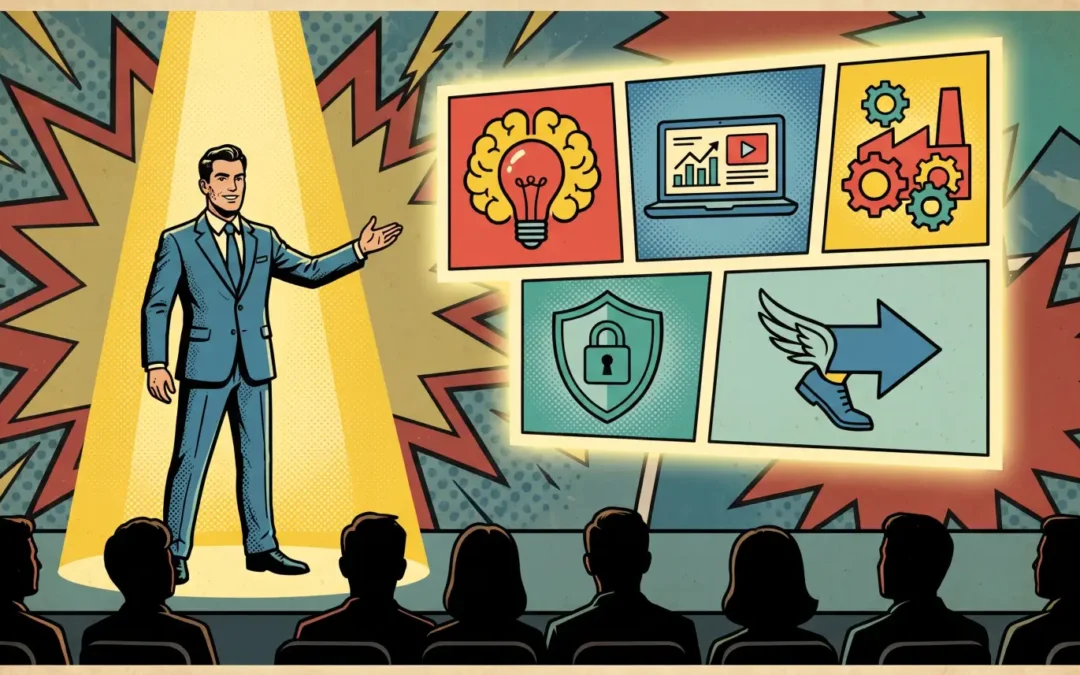
- Five building blocks carry almost every AI keynote: orientation, a live demonstration, use cases from the audience's own industry, limits and risks, and concrete next steps.
- The audience decides the weighting: a board-level circle needs different emphases than a sales force or a company-wide staff day.
- Technology history, model comparisons and doomsday scenarios cost time and attention – and give the audience nothing to act on.
- A briefing call before the event is the best way to turn a standard topic list into a talk that fits your programme.
You have made the decision: your event will feature a talk on artificial intelligence. Then comes the question that stalls many programmes – what exactly should that talk cover? Because "AI" is not a topic, it is an umbrella term for dozens of topics. Pack everything in and you lose the room; pick the wrong things and you lose it too.
Why does topic selection decide whether the talk works?
Picture two talks. In the first, your audience spends 45 minutes learning how neural networks function, which models exist and how the market is developing. In the second, it watches a chaotic flood of email turn into a sorted task list in three minutes – using tools the company already licenses.
Both talks are about artificial intelligence. Only one of them changes anything on the Monday after. Weak AI talks rarely fail because of stagecraft; they fail because the topic list is assembled from the technology's point of view instead of the audience's. So discuss content before booking, not just the date.
Which five topics belong in every AI talk?
First: orientation. What is artificial intelligence – and what is it not? Ten minutes of orientation take the mystery out of the subject and create a shared language in the room. Without it, enthusiasts and sceptics talk past each other all day.
Second: a live demonstration. Nothing convinces faster than an application that genuinely runs on stage. Anyone can show screenshots. A demonstration that turns a task from the audience into a result is what people remember.
Third: use cases from the audience's own world. Examples from Silicon Valley impress; examples from your own industry move people. The difference between "interesting" and "I will try that tomorrow" sits exactly here.
Fourth: limits, data protection and responsibility. Where do language models hallucinate? Which data may go in, and which may not? A talk that skips these questions feels like a sales pitch – and loses precisely the critical minds you need for the rollout.
Fifth: the next steps. What can every person in the room actually do next week? Without that closing block, a talk is entertainment. With it, it becomes a starting point.
How do you tailor the topics to your audience?
The five blocks stay the same; their weighting changes. A leadership circle cares about decisions: where is it worth starting, what does hesitating cost, how does AI change roles and responsibility? Here orientation may run longer and tool depth shorter.
A sales force wants to see how preparation, proposals and follow-up get faster. A staff day with a mixed audience mainly needs relief from fear plus many small examples people can use immediately. At a customer event, entertainment carries as much weight as technical depth.
Which topics are better left out?
Three classics cost time without creating effect. The first is technology history: open in 2026 with the Turing test and you lose half the room before it gets interesting. The second is the model comparison – which language model currently leads which benchmark is outdated within six weeks.
The third is the doomsday scenario. Fear creates attention, but not action. An unsettled audience implements nothing – an audience with a realistic assessment and two workable steps does.
How much time does each topic block need?
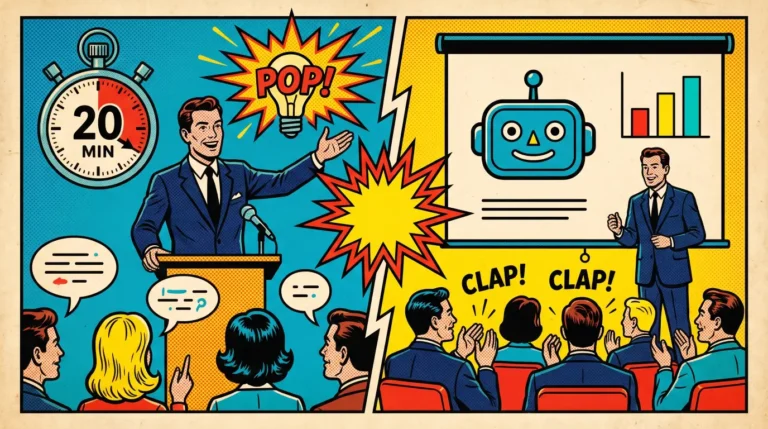
For a 60-minute keynote, a simple split works: ten minutes of orientation, a good twenty minutes of live demonstration and use cases, ten minutes on limits and responsibility, ten minutes on next steps – and the rest for questions from the floor.
For a 30-minute impulse talk, do not trim a little everywhere. Concentrate on two blocks instead: one demonstration and the next steps. Fewer topics, done properly, is almost always the better decision.
Planning an event? As a keynote speaker for artificial intelligence, digitalization and Microsoft 365, I bring technology topics to the stage in a way that sticks – hands-on, entertaining and immediately actionable. Book an AI keynote: content, formats and fee at a glance.
Frequently Asked Questions (FAQ)
How many topics fit into a talk on artificial intelligence?
A 60-minute keynote holds five blocks if they are clearly separated. In 30 minutes, two or three is the sensible maximum. More topics do not mean more content – they mean less depth.
Does the audience need prior knowledge of AI?
No. A good talk picks up beginners and experienced users at the same time because it works with everyday examples rather than technical jargon. Prior knowledge in the room helps, but it is not a requirement.
Who defines the topics – the organiser or the speaker?
Both together. You know your audience and your goal; the speaker knows the effect of each building block. The briefing call turns that into an agenda that fits your event.
Can AI topics be combined with digitalization?
Yes, and it often makes sense. Artificial intelligence works best where processes and collaboration are already thought through. A combined talk shows both in context instead of as separate worlds.
What does a talk on artificial intelligence cost?
The fee for a keynote is 6,900 € plus VAT, with a flat travel allowance of 500 €. It includes the content briefing call and tailoring the topics to your audience.