Key Takeaways
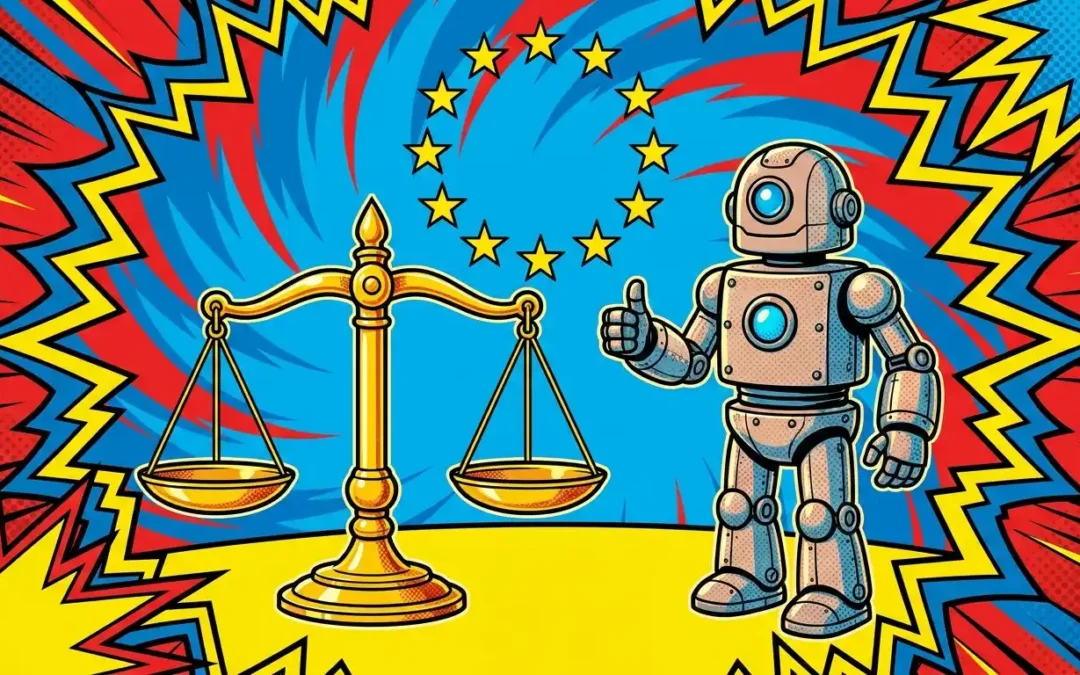
- The EU AI Act applies in stages: bans since February 2025, rules for AI models since August 2025, most remaining obligations from August 2026.
- Article 4 already obliges companies to ensure the AI literacy of their employees.
- Compliance is only lived when it is understood – dry mandatory training rarely achieves that.
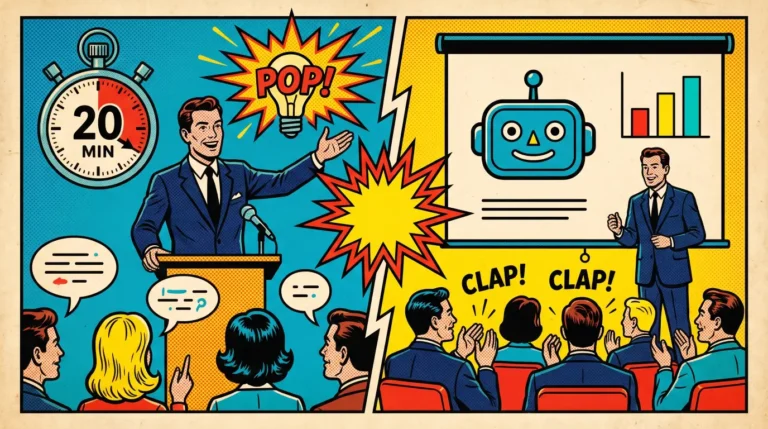
- A keynote turns the compliance topic into a departure: understandable, concrete, without legalese.
Hardly any topic creates as much uncertainty in briefing calls as the EU AI Act: What applies already? What are we facing? And how do we get the workforce on board? The good news: those who communicate the topic well gain more than legal certainty.
What Does the EU AI Act Require of Companies?
- Know and exclude prohibited practices (since February 2025).
- Inventory AI usage and classify by risk – most office applications are minimal risk.
- Build demonstrable AI literacy (Article 4) – for everyone working with AI.
- Implement the remaining obligations by August 2026, such as transparency rules.
Why Do Classic Compliance Trainings Fail on This Topic?
Because they create fear of mistakes instead of competence in usage. Those who only hear clauses prefer to avoid AI altogether – and that is the most expensive outcome: the productivity opportunity evaporates while shadow AI keeps running on private devices, without any control. Regulation needs translation: what does this mean for my workplace, concretely?
How Does a Keynote Convey Regulation Without Wearing People Out?
With practice instead of paragraphs: I show in real work situations what is allowed, required and prohibited – and connect the obligation with the benefit. The experience from associations and mid-sized companies: after 60 minutes, “yet another regulation” has turned into “then let's do it right”. Compliance and enthusiasm are not mutually exclusive – they just need the same keynote.
Which Deadlines of the EU AI Act Apply When?
The regulation does not arrive all at once but in stages. Decision-makers should know these four dates:
- August 2024: the regulation enters into force and the clock starts for all stages.
- February 2025: prohibited practices apply, and companies must ensure sufficient AI literacy among their staff.
- August 2025: obligations for providers of general-purpose AI models and the governance structures take effect.
- August 2026: the bulk of the rules becomes applicable, in particular for high-risk applications.
For most mid-sized companies the provider role is not the decisive one – the deployer role is: you use systems built by others. That makes things simpler, but not consequence-free. This article is not legal advice; it frames the topic for the leadership level.
What Does a Pragmatic Implementation Path Look Like?
Six steps are enough for a solid start without turning it into a major programme:
- Inventory: which AI tools are actually in use here – including the unofficial ones?
- Classification: where do these applications touch staff, customers or safety-relevant decisions?
- Rules on one page: approved tools, forbidden data, disclosure requirements.
- Training with evidence: who was trained, when, and on what?
- Name the people responsible – in the business, not only in IT.
- An annual review, because tools change faster than policies.
What Does AI Literacy Mean in Practice?
This is not about a computer science degree but about job-related basic understanding: what can the tool do, where does it invent content, which data may go in, when must a human check, and how do we disclose AI support? A tiering by role makes sense – management needs orientation for decisions, back office needs confidence in daily work. Important for documentation: record attendance, date and content. From an auditor perspective, what is not documented did not happen.
Planning an event? As a keynote speaker for artificial intelligence, digitalization and Microsoft 365, I bring technology topics to the stage in a way that sticks – hands-on, entertaining and immediately actionable. Book an AI keynote: content, formats and fee at a glance.
Frequently Asked Questions (FAQ)
Does the AI Act also apply to small companies?
Yes – the obligations scale with risk, not with company size. Even a ten-person business using AI needs literacy and an overview of its use cases.
Is an annual online training enough for Article 4?
Formally perhaps, practically no: AI literacy grows through application. A kick-off impulse plus short, regular learning formats in everyday work has proven effective.
Can the keynote be aligned with our data protection officer?
Of course – for this topic, the preliminary call with data protection and IT is standard, so statements and company rules fit together.
Is a keynote sufficient evidence of AI literacy?
A keynote is an effective building block for awareness and basic understanding, but rarely sufficient on its own. The sensible combination is impulse, role-specific deepening and documented attendance.
Who is liable if employees use AI incorrectly?
Externally, the company – which is precisely why clear rules, training and records are not bureaucracy for its own sake but self-protection. The concrete assessment belongs in the hands of your legal advisors.