Key Takeaways
- AI is an accelerator for routine work – responsibility, judgment and relationships remain human.
- Knowing the limits means using AI more precisely and avoiding expensive wrong decisions.
- For leaders this means: redistribute tasks instead of cutting jobs across the board.
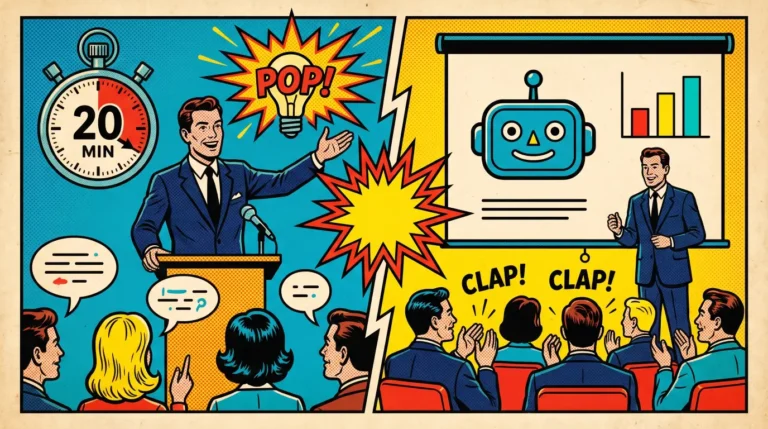
- On stage, this topic works best with live examples that show AI succeeding AND failing.
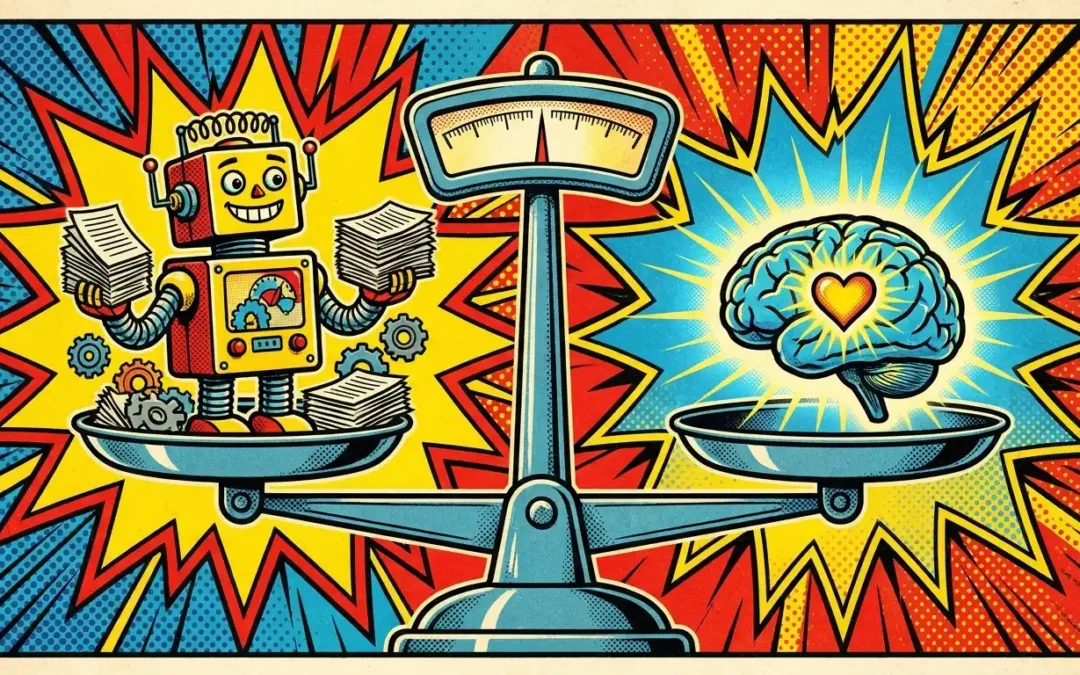
The most exciting question in my keynotes is rarely “What can AI do?” – but “What should it take over in our company, and what definitely not?”. Exactly at this boundary it is decided whether artificial intelligence becomes a tool or a risk.
Where Does AI Play to Its Strengths?
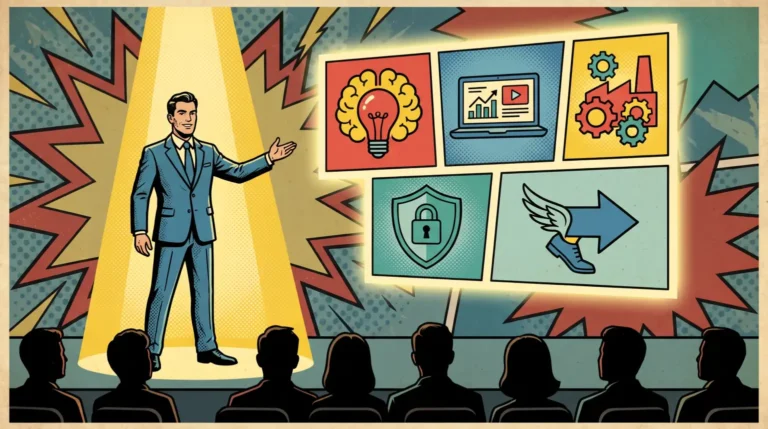
Wherever patterns, language and repetition dominate: drafting texts, summarizing meetings, structuring data, bundling research. I show this live on stage – and the aha moment is reliably the same: it is not the technology that impresses, but the time gained.
Where Do Humans Remain Irreplaceable?
AI knows no responsibility. It can deliver options but cannot own a decision; it can simulate empathy but cannot build a relationship; it can phrase facts that are not facts – more convincingly than ever. That is why every team needs a sharpened eye for verification. My guiding principle from hundreds of events: think first, then prompt – and think again at the end.
What Does This Mean for Leaders?
The productive question is not “Whom does AI replace?” but “Which tasks do we hand over so our people can do what only humans can?”. Companies that think this way win twice: productivity through automation and motivation through more meaningful work.
How Do You Recognise Tasks That Suit AI?
Instead of debating principles, a sober checklist helps. Five characteristics argue for handing a task to AI:
- It involves a lot of text or data that a human would have to wade through.
- The task repeats – weekly, not once a year.
- There is a clear quality criterion you can measure the result against.
- A mistake can be corrected before it reaches the outside world.
- The final decision stays with a human being.
If one of the first three is missing, the effort usually does not pay off. If the last two are missing, it is not too early for the technology – it is too risky.
How Do You Divide Work Sensibly Between Human and Machine?
Three patterns have proven themselves in daily work and can be tried immediately:
- The machine delivers the draft, the human passes judgement.
- The machine researches broadly, the human selects and checks the source.
- The machine provides structure, the human provides stance, tone and accountability.
The common denominator: the machine takes the legwork, the human takes the meaning. That is precisely why good judgement becomes more valuable, not redundant.
Where Does AI Go Wrong Most Reliably?
There are recurring weak spots you should know before relying on an output: invented figures that sound plausible. Outdated facts, because the model has an older state of knowledge. Source references that do not exist in that form. Missing context from your company – the machine does not know your customers. And nuance: irony, conflict and unspoken expectations remain foreign to it. Anyone holding these five points in mind checks in a targeted way instead of distrusting everything.
Planning an event? As a keynote speaker for artificial intelligence, digitalization and Microsoft 365, I bring technology topics to the stage in a way that sticks – hands-on, entertaining and immediately actionable. Book an AI keynote: content, formats and fee at a glance.
Frequently Asked Questions (FAQ)
Does AI hallucinate even on simple tasks?
Yes, occasionally – even modern models invent facts, just more convincingly worded. Therefore: AI results are drafts, not truths. Verification remains a human task.
Is this topic suitable for a keynote in front of a mixed audience?
Very much so – precisely because it sets expectations right. Beginners lose their shyness, advanced users their overconfidence. A company needs both for smart AI decisions.
How quickly do statements about AI limits become outdated?
Capabilities grow, the principles remain: responsibility, context and judgment cannot be delegated. That is exactly why this topic has been at the core of my talks for years – with constantly updated examples.
How do we check AI results efficiently?
Not everything with the same rigour: always verify figures, names and quotes; merely skim wording. This simple split saves time and reliably catches the dangerous errors.
Should we disclose AI support?
Internally yes – it creates honesty and makes it easier to learn from each other. Externally it depends on the context; what matters is that a human is accountable for the result and can say so.